493 years of corruption in Peru: twenty documented cases (1532–2021)
A chronological tour through twenty cases of structural corruption in Peru, from the Viceroyalty to Vacunagate, based on the work of Alfonso W. Quiroz and journalistic sources. Enable JavaScript for the full interactive experience.
Toledo and the Repartimiento of Indians (1581)
Era: Virreinato · Type: Cargos vendibles
In 1581, viceroy Francisco de Toledo finished engineering colonial Peru with a system that would shape the country for centuries. He compelled indigenous communities to labor in the mines (the mita), invented a tax paid only by natives (the tributo), and placed an officer in every district to collect it: the corregidor.
Castelldosrius and the 100 Million in French Silver (1707)
Era: Virreinato · Type: Captura del Estado
Castelldosrius arrived in Peru in 1707 broke. He had lost his lands in Barcelona during a European war and needed to recover money fast. It helped that he arrived as virrey (viceroy) —the highest office in colonial Peru— and that Spain was allied with France. That alliance meant French ships could enter Peruvian ports. Some paid duties. The ones he protected did not.
Ineffective Visitas and the Capture of Colonial Justice (1700)
Era: Virreinato · Type: Manipulación judicial
Spain had two ways to control its officials in the Americas: the visita (a surprise inspection) and the juicio de residencia (a mandatory review at the end of an officer's term). On paper, it looked like a sound system. In practice, the judge sent to audit the officer was almost always his friend, his debtor, or his business partner. Files were closed with small fines, convenient statutes of limitations, or technicalities.
The Alcabalas, the Asentistas and the Prerebellion Discontent (1765)
Era: Virreinato · Type: Fraude fiscal
The Bourbon reforms raised the alcabala —the tax on commerce within the viceroyalty— from 4% to 6%. But the state did not collect it directly. It auctioned collection rights to private parties called asentistas: the highest bidder paid up front and kept whatever he could collect during his term. The official rate was 6%. The one merchants ended up paying on the street was 12% or 14%, once the bribes to the local collector were added in.
Amat, Huancavelica and the Tariffed Bribe (1764)
Era: Virreinato · Type: Cargos vendibles
In 1758, Spain sent one of its best men to Peru: Antonio de Ulloa, scientist and naval officer, charged with cleaning up Huancavelica, the most important mercury mine in the empire (mercury was needed to refine silver). What he found was a system of organized theft: falsified accounts, cave-ins triggered to hide losses, officers selling mercury on the side. And a fixed bribe of 10,000 pesos a year that the local governor was expected to deliver to viceroy Amat.
The Patriot Plunder and the First Tainted Loans (1824)
Era: Independencia · Type: Captura del Estado
Independence changed the flags, not the customs. San Martín and his minister Monteagudo confiscated the properties of Spanish residents and royalist criollos in 1821-1822 for two million pesos 'for the patriot cause'. The haciendas were doled out as rewards among the generals: Sucre, O'Higgins, Echenique. The Chilean admiral Cochrane pocketed the silver reserves held in El Callao.
Guano Consignees and the Consolidation of the Internal Debt (1849)
Era: Era del Guano · Type: Contratos públicos
Guano was the oil of the 19th century. The islands off the Peruvian coast stockpiled tons of bird droppings that sold like gold as fertilizer in Europe. The Peruvian state owned them but did not know how to sell. So it signed contracts with European trading houses —the consignatarios— to sell the guano on its behalf for a commission. The English firm Gibbs dominated those contracts for two decades. Then came the 'Compañía Nacional' (Pardo, Canevaro, Barreda, Elías), which took the next contract without a tender.
Consolidación and Conversion: the First Republican Laundering (1853)
Era: Era del Guano · Type: Fraude fiscal
The Consolidación of the internal debt began well: it was a necessary reform to sort out the claims accumulated against the state since independence. But under José Rufino Echenique (1851-1855) it became the best-documented financial scandal of the early Republic. In just twelve months, the debt 'recognized' by the state went from 5 to 24 million pesos.
The Dreyfus Contract (1869)
Era: Era del Guano · Type: Contratos públicos
In January 1869, president José Balta named as Minister of Hacienda the 25-year-old Nicolás de Piérola, recommended by former president Echenique. Four days later, Congress authorized the Executive to launch an 'open' bid to sell Peruvian guano. But Piérola had already approached a French house, Dreyfus Frères, and Dreyfus was already advancing money to the government before even submitting a formal offer.
Meiggs, the Green Notebooks and the Bankruptcy (1875)
Era: Era del Guano · Type: Captura del Estado
Henry Meiggs was an American contractor who arrived in Peru in 1868. He carried two notebooks —one green, one red— where he kept detailed records of which official he had bribed, how much, and when. He told a British banker how his method worked: 'let the highest authorities sell themselves and set their own price'. He then simply added what he had paid to the total cost of the project. The one who ended up paying the bribes was the state.
The Grace Contract (1889)
Era: Reconstrucción · Type: Contratos públicos
Michael P. Grace was, in Quiroz's words, 'an improved disciple of Meiggs'. Where Meiggs bribed in bulk and by the ton, Grace operated with calculation, austerity and gold watches as gifts. In a letter to his colleagues in Lima he warned: 'we know from experience that if the insinuations are not made cautiously, you will receive unreasonable demands for money'.
The Oncenio of Leguía (1920)
Era: República Aristocrática · Type: Captura del Estado
Augusto B. Leguía governed Peru for eleven years (1919-1930) and turned the state into a family business. The American adviser William Cumberland, whom Leguía himself had hired to direct the Banco Central, later wrote: 'Leguía allowed all his friends to take advantage of corruption to their hearts' content. He ruined the finances of Peru as if he himself had been the corrupt one'.
Page 11, Military Smuggling and Velasco's Coup (1968)
Era: Militarismo · Type: Sobornos políticos
The International Petroleum Company, which was in fact a subsidiary of America's Standard Oil, operated the Peruvian oil fields of La Brea and Pariñas for half a century paying minimal royalties: around 2% of the value of the oil. For comparison, Venezuela and Mexico were charging close to 50%. The Acta de Talara, signed in 1954 under Odría, 'regularized' that highly favorable situation for the company.
EPSA, Pescaperú and the Military Twelve Years (1976)
Era: Militarismo · Type: Fraude fiscal
Quiroz's numbers for 1970-1979 are clear: the 'revolutionary' military dictatorship (Velasco from 1968 to 1975, Morales Bermúdez from 1975 to 1980) reached 42% of public spending and 4.9% of GDP in corruption —the highest percentage of Peru's 20th century. The mechanic was different from Leguía's: not commissions on public works, but massive inefficiency and capture of the new state companies.
BCCI, Mirage and Mantilla: the First Aprismo at the Treasury (1988)
Era: Transición democrática · Type: Sobornos políticos
Alan García reached the presidency in July 1985 at 36 years old, with the enthusiastic backing of the APRA —winning the Executive for the first time in its history— and a promise to 'save Peru'. Five years later, he left office with accumulated inflation above one million percent, the external debt in default, an out-of-control internal war, and a list of investigations against him that would take three decades to close.
The Self-Coup of April 5 and the Capture of the State (1992)
Era: Transición democrática · Type: Captura del Estado
The self-coup of 5 April 1992 was not merely an institutional crisis. It was the legal act that enabled the largest and best-documented corruption network in republican history. Fujimori dissolved Congress, intervened in the Judiciary and handed the SIN —Servicio de Inteligencia Nacional— the day-to-day running of the state. With no checks, no prosecutor, no free press and no Congress, the way was clear.
The Vladivideos and the Cinematic Fall (2000)
Era: Transición democrática · Type: Sobornos políticos
Vladimiro Montesinos filmed all his meetings in an SIN room with hidden cameras, as personal insurance against betrayal. On 14 September 2000, one of those tapes —congressman Alberto Kouri receiving 15,000 dollars to switch parties— went on air on the cable channel Canal N. The regime did not fall: it exploded. In sixty-five days, Fujimori resigned the presidency by fax from Tokyo and Montesinos was fleeing the country.
Petroaudios: the Second García and the First Escape (2008)
Era: Post-Fujimori · Type: Sobornos políticos
On 5 October 2008, the program Cuarto Poder aired recordings of Rómulo León Alegría —a former aprista close to president Alan García— negotiating percentages on oil concessions with an executive of the Norwegian firm Discover Petroleum. The audio included unforgettable lines about how the money was collected and named figures in the presidential entourage.
Lava Jato Peru: Five Presidents, One Cashbox (2018)
Era: Post-Fujimori · Type: Sobornos políticos
When Brazil's Federal Police broke open the 'Lava Jato Case' in March 2014 against the construction firm Odebrecht and other companies, no one imagined the most documented case would be the Peruvian one. In 2016, the Brazilian executives signed a cooperation agreement with prosecutors and confessed to payments of at least 29 million dollars to Peruvian officials between 2005 and 2014.
Vacunagate and the Old Privileged Access (2021)
Era: Post-Fujimori · Type: Captura del Estado
February 2021. Peru was eleven months into the pandemic with more than 40,000 dead and had not yet officially purchased a single vaccine. The journalist Roxana Romero then revealed that 487 officials, relatives and associates —including former president Martín Vizcarra, several ministers, ambassadors, university rectors and priests— had been vaccinated in secret with 'courtesy' doses that Sinopharm had sent for the clinical trials.
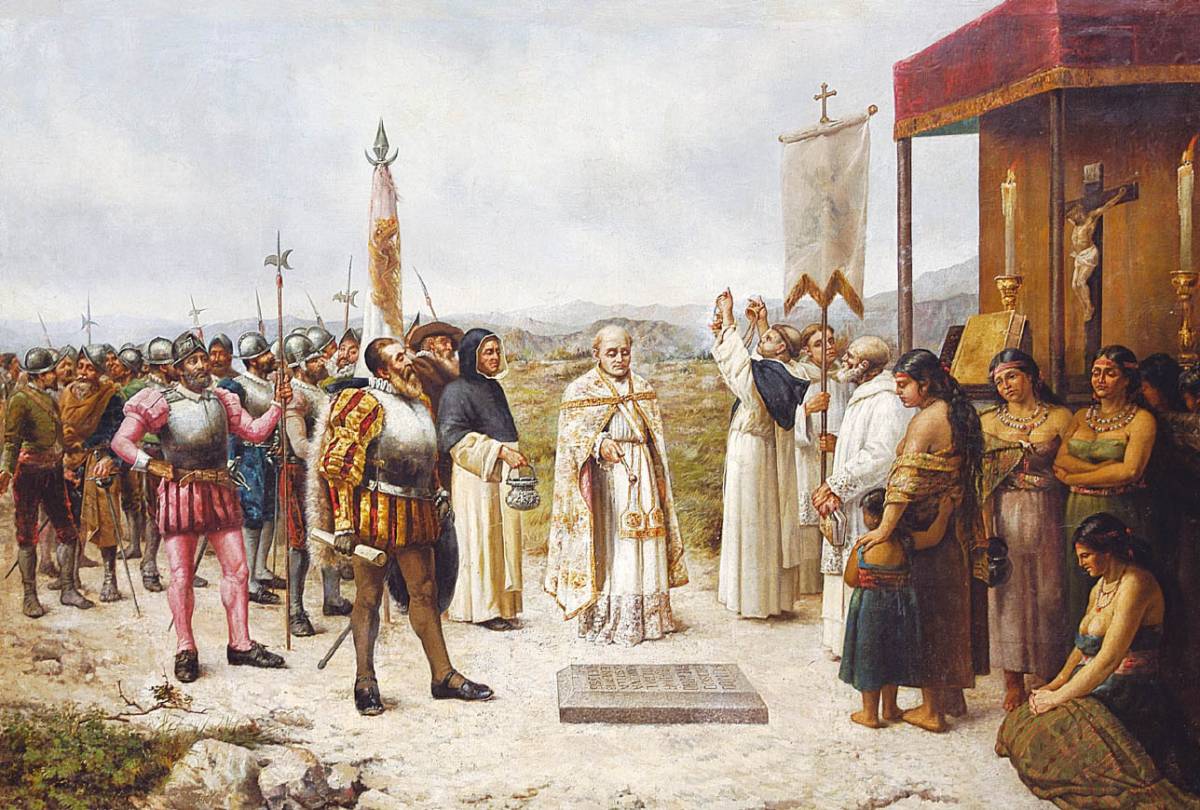 Archive · Foundation of Lima · 1535